
RIKODEINE® Cough Liquid (Dihydrocodeine Tartrate)
1. Product Overview
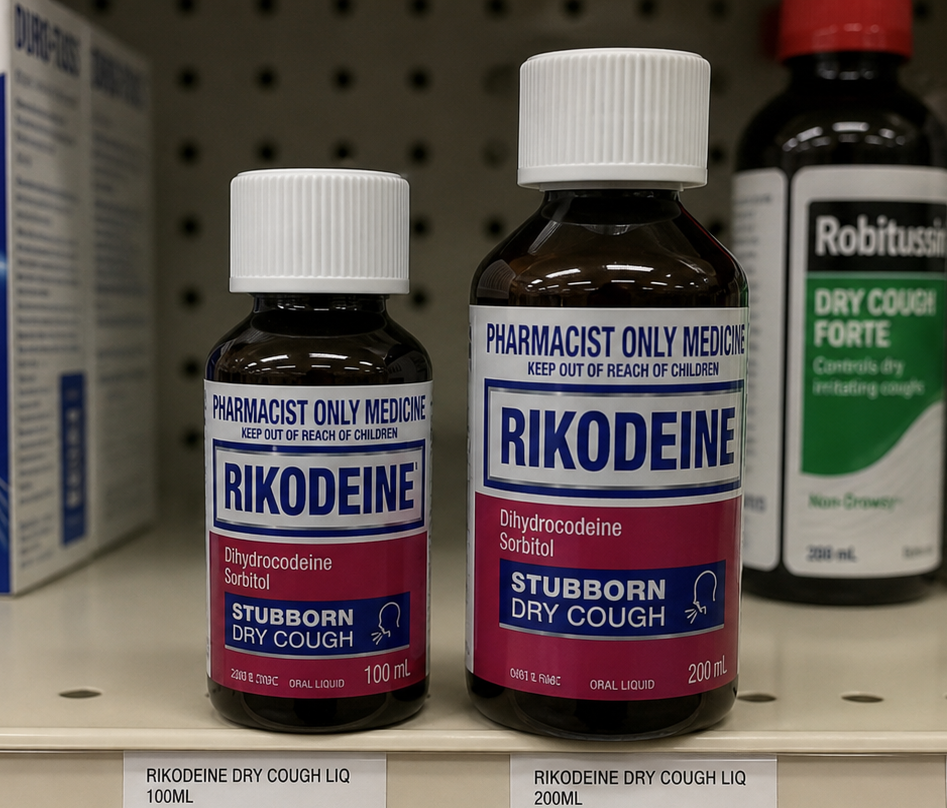
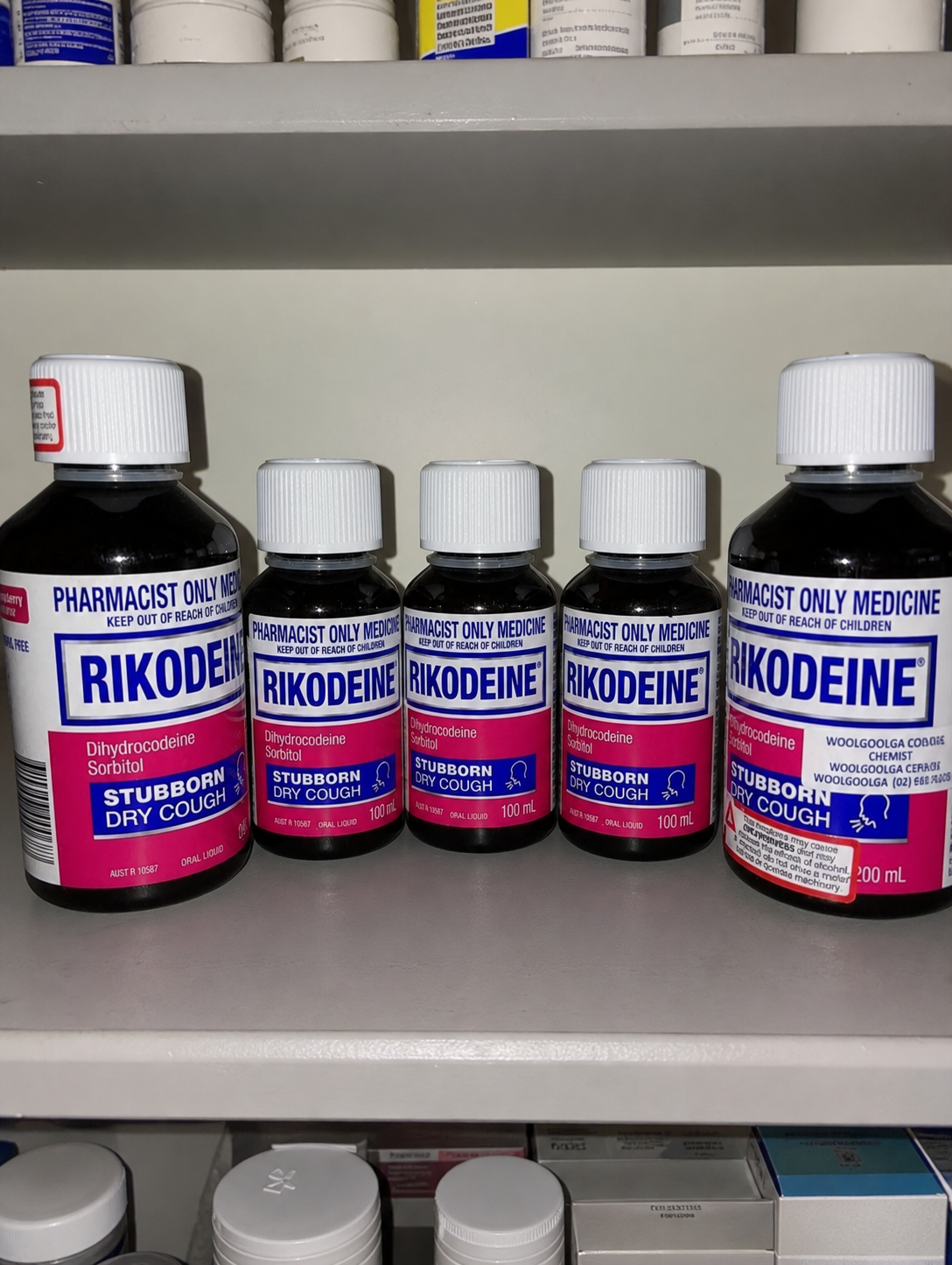
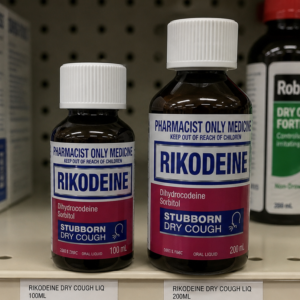
Rikodeine is a pharmacist-only oral liquid containing dihydrocodeine, a semi-synthetic opioid analgesic and potent cough suppressant. Marketed primarily in Australia and New Zealand by iMedicare (formerly Aspen Pharmacare/Mundipharma), it is positioned as a second-line treatment for stubborn, irritating dry coughs that have not responded to simpler treatments (e.g., pholcodine or dextromethorphan). The product is presented as a dark red/cherry-flavored syrup in amber glass bottles (100 mL and 200 mL sizes) with child-resistant screw caps.
2. Chemical Composition & Formulation
| Component | Function | Typical Concentration |
|---|---|---|
| Dihydrocodeine Tartrate | Active ingredient (opioid agonist) | 10 mg per 5 mL (standard strength) |
| Sorbitol Solution (70%) | Vehicle, humectant, sweetener | ~50-60% w/v |
| Sodium Benzoate | Preservative | 0.1-0.2% |
| Flavorants | Palatability (Cherry/Blackcurrant) | q.s. |
| Purified Water | Solvent | Balance |
| Color | Caramel/Erythrosine (red-brown) | Trace |
Note: This formulation is alcohol-free (ethanol-free), reducing interaction risks with other CNS depressants compared to older codeine syrups.
3. Therapeutic Indication
Primary Use: Symptomatic relief of severe, dry (non-productive) cough unresponsive to non-opioid antitussives.
Clinical Context:
- Suitable for adults and adolescents over 12 years (age restrictions vary by jurisdiction—often 18+ due to opioid content).
- Specifically indicated when cough suppression is medically desirable (e.g., post-operative coughing causing pain, cough-induced insomnia, or dry hacking cough from viral URTIs without sputum production).
- Not indicated for: Asthmatic coughs, productive/wet coughs requiring expectoration, or chronic obstructive pulmonary disease (COPD) without specialist supervision.
4. Pharmacology & Mechanism of Action
Class: Semi-synthetic opiate; derivative of codeine (~1.4–2.0x potency of codeine, roughly equiparent to hydrocodone).
Mechanism:
- Acts centrally as an agonist at μ-opioid receptors in the medullary cough center (area postrema/nucleus tractus solitarius), raising the threshold for cough reflex initiation.
- Also possesses mild-to-moderate analgesic properties via supraspinal spinal cord modulation, though this is secondary to its antitussive effect at therapeutic doses.
- Antitussive onset: 20–30 minutes after oral administration.
- Duration of action: 4–6 hours (half-life ~3.5–5 hours).
5. Directions for Use (Standard Protocol)
Adults & Children ≥12 years (per local guidelines):
- Dosage: 5 mL (10 mg) every 4–6 hours as needed.
- Maximum Daily Dose: 30 mg (15 mL) in 24 hours (strict limit to prevent toxicity).
- Duration of Use: Maximum 5 consecutive days unless directed by a doctor. Longer use increases risk of tolerance, dependence, and rebound cough hypersensitivity (opioid-induced hyperalgesia).
Special Populations:
- Elderly/Hepatic Impairment: Reduce dose by 25–50%; monitor for excessive sedation/respiratory depression.
- Renal Impairment: Avoid accumulation; use lower doses or extended intervals.
- Children <12 years: Contraindicated (risk of life-threatening respiratory depression).
Administration:
Oral use only. Measure with provided dosing cup/syringe. Do not mix with alcoholic beverages.
6. Critical Safety Information & Warnings
⚠️ High-Alert Classifications:
- S3 (Australia): “Pharmacist Only Medicine” – Must be sold behind-the-counter with mandatory pharmacist consultation regarding risk minimization.
- Controlled Substance Status: Dihydrocodeine is scheduled under drug control laws in most countries due to abuse potential (Schedule II/V depending on jurisdiction).
Contraindications (Do Not Use If):
- Acute respiratory depression, acute severe asthma, or hypercapnia (CO₂ retention).
- Known hypersensitivity to opioids, dihydrocodeine, or any excipient.
- Concurrent use of monoamine oxidase inhibitors (MAOIs) (within last 14 days) – risk of serotonin syndrome/hypertensive crisis.
- Paralytic ileus or abdominal surgical conditions where peristalsis is critical.
- Pregnancy (Category C) – crosses placenta; neonatal respiratory depression possible.
- Breastfeeding – excreted in milk; can cause infant sedation/apnea.
Major Drug Interactions:
| Interacting Agent | Risk | Clinical Significance |
|---|---|---|
| Alcohol, benzodiazepines, barbiturates, other opioids | Profound CNS/respiratory depression | BLACK BOX WARNING equivalent |
| Anticholinergics (antihistamines, TCAs) | Severe constipation, urinary retention, paralytic ileus | High |
| SSRIs/SNRIs (e.g., fluoxetine, tramadol) | Serotonin syndrome (hyperthermia, rigidity, agitation) | Moderate-High |
| CYP2D6 inhibitors (quinidine, fluconazole) | Reduced conversion to active metabolite → altered efficacy/toxicity | Variable |
7. Adverse Effect Profile
Common (>5%):
- Constipation (opioid bowel dysfunction) – often requiring prophylactic laxatives.
- Nausea/vomiting, epigastric discomfort.
- Sedation/drowsiness, dizziness, lightheadedness.
- Dry mouth, facial flushing.
Serious/Rare (<1% – Require Immediate Medical Attention):
- Respiratory depression (bradypnea <10 breaths/min, cyanosis).
- Hypotension, syncope.
- Physical dependence, psychological addiction (craving, drug-seeking behavior) with prolonged use.
- Seizures (particularly if history of epilepsy or head trauma).
- Urinary retention (especially in prostatic hypertrophy).
Long-Term Risks:
Rebound tachyphylaxis (tolerance) may occur within days; abrupt discontinuation after >1 week use can precipitate withdrawal (agitation, rhinorrhea, myalgia, piloerection).
8. Overdose Management
Toxicity Signs: Pinpoint pupils (miosis), profound somnolence/coma, skeletal muscle flaccidity, bradycardia, hypotension, respiratory arrest (death).
Emergency Treatment:
- Maintain airway (intubation/ventilation if needed); administer 100% oxygen.
- Naloxone (Narcan) IV titrated every 2–3 minutes to reverse respiratory depression (may need repeat dosing due to dihydrocodeine’s longer half-life than naloxone).
- Gastric lavage if presentation <1 hour post-ingestion; activated charcoal (50g adult dose).
- Supportive care (IV fluids, vasopressors for hypotension).
9. Patient Counseling Points (Critical for Pharmacist)
Before dispensing, verify:
- ✅ Patient age (>12 years ideally >18 years locally).
- ✅ No history of substance use disorder (opioid dependence risk).
- ✅ No concurrent driving/operating heavy machinery requirements (impairment occurs).
- ✅ Understanding that <5 days use only to prevent habituation.
- ✅ Not mixing with alcohol (“one drink equals double effect”).
- ✅ Laxative prophylaxis advised if >3-day course.
- ✅ Return unused medication to pharmacy for disposal (do not flush down toilet—environmental hazard).
10. Storage & Stability
- Temperature: Store below 25°C (77°F); do not freeze. Protect from light (amber bottle essential).
- Shelf Life: Typically 24 months from manufacture; discard 6 months after opening (oral liquids support microbial growth despite preservatives).
- Container: Keep tightly closed in original container (child-resistant cap required by law).
11. Regulatory & Legal Summary
| Attribute | Detail |
|---|---|
| Legal Status (AU/NZ) | Schedule 3 – Pharmacist Only Medicine (S4 in some contexts if >20mg/5ml) |
| Prescription Required? | No, but requires pharmacist interview and recording in dispense log |
| PSP (Poisons Standard) | Appendix H entry for opioid restrictions |
| ADRs Reporting | Report suspected adverse reactions to TGA (AU) or Medsafe (NZ) |
Conclusion & Risk Stratification
Rikodeine represents a high-potency, controlled-access therapeutic option appropriate only for carefully selected patients with debilitating dry cough who fail first-line therapies. Its utility is strictly bounded by the narrow therapeutic window between effective cough suppression and opioid-induced adverse events. It is not a benign remedy; possession carries responsibility for safe storage, adherence to temporal limits, and awareness of central nervous system depression risks.
Disclaimer: This information is for educational purposes and does not constitute medical advice. Always read Consumer Medicines Information (CMI) leaflets and consult a healthcare professional before initiating treatment.
Reviews
There are no reviews yet.